Anybody for a swim?
Cedric

This is a gym in North Kohala where school children come to play their basketball and volleyball games. There also use to be boxing matches here. Once upon a time I played basketball here, too. There is also a weight room here where I lifted weights when I had time. Better get back to it before my muscles disappear.
Cedric

Today we will study the Japanese expression “an ogre getting sunsick” (鬼の霍乱), which is used to express surprise when a strong person falls ill unexpectedly. The figurative language found in this expression is somewhat unique in that it does not stray too far from what it describes.
In the Edo period, strong people were referred to as 鬼(おに), which actually has many possible translations into English: devil, ghost, demon, and ogre. In this instance I have chosen to use “ogre” because it conveys the sense of a strong creature that is not necessarily malevolent, which is closest to how one might think of a stong person. Anyways, if a poet were asked to think of words to describe a strong person, his mind would leap to images like hard steel, towering trees, and powerful waves. Ogres would be the last thing on his mind, since the two things being thusly compared would be so similar as to invite confusion. One could easily mistake which traits of the ogre are being ascribed to the man.
Let’s now take a look at 霍乱(かくらん).These two characters are an abbreviation for 揮霍撩乱(きかくりょうらん), which refers to flailing one’s hands about in struggle. This four character compound was used in the Edo period to refer to sunsickness. In our current expression,霍乱 simply refers to any type of severe illness. Once again, if a poet were asked to describe severe illness, he would not do it this way. He would choose powerful images instead of simply picking one illness to represent them all.
Though most of us are not poets, we do use figurative language from time to time. Considering the topic of this article, it bears mentioning that a great many of our idiomatic expressions in English use such language; for example, “raining cats and dogs”, “when pigs fly”, “have a bone to pick”. In most if not all of these idioms, what is said and what is meant are very far apart, yet share one common characteristic that is easy to identify (heavy things falling, impossible things happening, doing something that will take a long time). I am not aware of any English idioms that make comparisons between things as similar as ogres and strong men, or sunsickness and other types of illness.
Perhaps the willingness of the Japanese to engage in such nuanced metaphors belies a broader characteristic of their culture. It may simply be a manifestation of their much-touted (or much-feared, for some westerners) ability to appreciate nuances. On the other hand, more obvious figurative language is also present within the Japanese body of idioms, such as “even the monkey falls from the tree” and “Koubou does not choose his brush”, meaning respectively, “even the best person makes mistakes” and “people of skill don’t rely on their tools”. Mulling these over and comparing them to our frivolous appeals to pigs, cats and bones certainly leaves one with the impression that the Japanese have a more profound way of thinking. Perhaps this profundity is truly the characteristic we are searching for.
「日本の老人の寝たきりだけでなく、日本で入院期間がダントツ長い原因について考えた事があります。第一に、居住条件からみて個室や寝室がないため、家では病人が生活しにくい、第二に、椅子に腰掛けずに畳に座る生活が寝たきりにつながりやすい、第三に、病院や寝たきりが唯一の逃げ場になっている、等が思いあたりました。ロコモの予防では、以上の問題をどのように解決するのか興味があります。」
以前、陽子さんとのやり取りの中で、ロコモティブシンドロームについての話題が出ました。
先日のナコスカンファレンスでの議題の一つにあげて、みんなで考えました。
まず、集まったメンバーが全員言語聴覚士であり、整形疾患についてあまり詳しくなかったので、
ロコモの定義からおさらいしました。
今日はまず、ロコモティブシンドロームについてと、なぜ寝たきりになってしまうか、考えたことをまとめたいと思います。
ロコモティブシンドロームは、骨粗鬆症や変形性膝関節症、大腿骨骨折などの整形疾患やリウマチや、
加齢に伴う運動機能低下が原因で介護が必要な状態になることです。
日本のロコモティブシンドロームの患者数は、4700万人にもなり国民病ともいわれているそうです。
現に、日々病院で働く中で、上に上げた疾患が原因で寝たきり状態になってしまう患者さんはよく見かけます。
日本の高齢者の方たちは、怪我をしたり病気をすると、外に出ずに引きこもり状態になる方が多いです。
足が痛いから歩くことができない、移動手段がない、人の手を借りると迷惑をかけるから出たくない、恥ずかしくて弱った姿を誰にも見られたくない…このような理由で閉じこもってしまう方は多いです。一人暮らしであると更に閉じこもってしまいます。
病気をしたことで移動能力が低下した上に、運動や外出の機会が減り、筋力や体力が衰えます。
人と話したり、考えたりする機会も減るので、認知機能も低下しますし、鬱状態にもなりかねません。
このように、悪循環に陥ってしまいます。
日本では、ロコモティブシンドロームの予防のために地域で講座が開かれたり、スポーツイベントが開かれるなどの取り組みがされていますが、まだまだ発展途上の段階です。
次回は、本題の陽子さんの問題提起してくださった、ロコモティブシンドロームと日本の住宅環境について書きたいと思います。
わかりにくい点など、アドバイスがあればコメントをお願いします。
断崖のV字グラスに秋の海
だんがい の Vじ グラス に あき の うみ
between cliffs
the autumn sea floats
in a “V” glass
– Nakamura Michiko

 みちこ
みちこ
ハワイ州のホノルルから、湘南に移動して、初めての冬を迎えます。
12月に入り、これからだんだん寒くなります。
とはいえ、この地は温暖で、風邪ひとつ引かずに過ごしています。
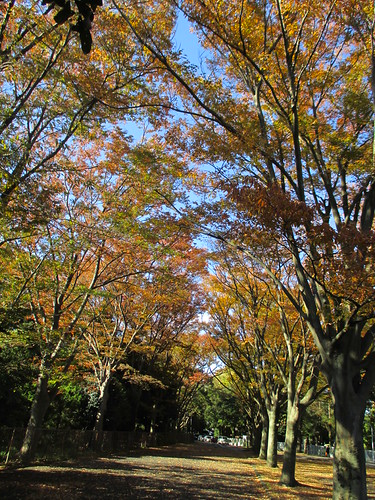
本格的な冬になる前に、晩秋の風景を残しておきます。



tables joined
a river of plates
we begin
卓合わせお皿の川で始めよう
たく あわせ おさら の かわ で はじめよう
– Chay Schiller

turkey oven hot
close family friends meet
football tv plays
Thanksgiving is a time when close family and friends get together to enjoy a traditional turkey dinner. It is also a time for football fans to watch their favorite teams play on the television.
七面鳥焼けて友との感謝祭
しちめんちょう やけて とも との かんしゃさい
感謝祭は、伝統的な七面鳥の夕食を楽しむために、家族や親しい友人が集まる時です。また、フットボールの愛好者が、お気に入りのチームをテレビで見る時です。
– Ben Clark
– Japanese by Nakamura Michiko

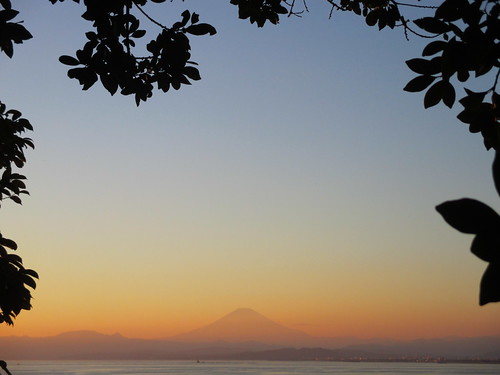
ナコスカンファレンスの帰りの飛行機から、富士山が見えました。
あまりにもきれいで厳かで、胸がいっぱいになりました。
日本を守っているように見えました。