毛変え時雪を横目にハスキー犬
けがえ どき ゆき を よこめ に ハスキーけん
陽子
庭にはまだ雪が残っているというのに犬の抜け毛が始まりました。
という事は、冬は終わり、春がそこまでやって来た?
毛変え時雪を横目にハスキー犬
けがえ どき ゆき を よこめ に ハスキーけん
陽子
庭にはまだ雪が残っているというのに犬の抜け毛が始まりました。
という事は、冬は終わり、春がそこまでやって来た?
Many Japanese people complement me on my knowledge of kanji. Indeed, I have advanced to be able to understand at least the meaning, if not the reading, of about 2,000 characters. I would estimate that I can read about 1,500 of these fluently. Michiko has urged me to write a little bit about how to study kanji for those who wish to accomplish similar goals.
The first thing I always recommend regarding any component of language study is that you find something about it that’s enjoyable. Usually, this will be a way to use what you learn productively as soon as possible. If your only goal is to be able to read a Japanese newspaper two years from now, you will surely give up before then since most people can’t keep drilling themselves for that long before reaping the fruits of their labor. You need a more attainable goal.
My first suggestion is actually best suited to those with little to no prior knowledge of kanji. It’s called Remembering the Kanji, by James Heisig. Heisig’s premise is that because the characters communicate meaning largely independently of the language, we can study them entirely on their own without obliging ourselves to actually learn the sounds and words that go with them. Heisig takes this premise and runs with it by suggesting that a beginning student actually learn the meaning of all 2,136 general use characters, and how to write them, before proceeding to learn how they specifically apply to Japanese. Heisig has the learner assign a meaning to each possible component of a character and then develop stories to help them remember the characters.
I myself used this method extensively, and although I didn’t fully see it through, I found the techniques I learned to be enormously helpful even when I chose to study kanji in other ways. So how on earth does Remembering the Kanji constitute an “attainable goal”? Well, for me each new character was a new challenge, and when I learned to write it from memory, I met a goal and found satisfaction. I was able to use the knowledge I learned about the composition of characters right away. In this sense, this method should be viewed not as one enormous goal, but as a set of 2,136 little ones. Here’s a link to a sample of the book: http://nirc.nanzan-u.ac.jp/en/files/2012/12/RK-1-6th-edition-sample.pdf
While my first suggestion involved writing kanji exclusive of their readings, my second one involves learning to read kanji without bothering to learn to write them or study them independently at all. Think about when you were learning to read English as a kid. Did your teacher have you make flashcards of letter combinations that produced different sounds in different words, like bough, through and dough? Probably not. You were likely only taught in this way if the traditional methods of “sounding out” and reading along with an adult didn’t work. The reason that we as students of Japanese must get so analytical is that we can’t just sit on mommy’s lap and pick up the language like the kids we once were. Or can we?
It turns out that the internet has become the new mother to us all in the form of pera pera kun, a free (with a suggested $5 donation) application for chrome and firefox that gives the meaning and reading of words simply by mousing over them. My second suggestion is to use this tool paired with readings of increasing difficulty to help you learn to read Japanese the same way you did English, while simultaneously building your vocabulary. This method also presents an attainable goal right away, since no matter what your level is, you can understand reading material right away using the instant lookup power of pera pera kun. Also, you can make reading comprehension experience more enjoyable by finding material that you enjoy reading about. Here’s the link to the firefox version of pera pera kun: https://addons.mozilla.org/ja/firefox/addon/perapera-kun-japanese-popup-tr/
Notice that my two recommended methods focus on the extremes of kanji learning: the pure meaning and form of the characters, and the practical application of the characters to real Japanese. Most learning methods in use involve a mixture; typically a student might be made to study the components, stroke order, on-yomi and kun-yomi, and a couple example compounds before moving on. I tried this for a few minutes, found it unbearably tedious、and went back to my two favorite methods. Because I worked on both reading and writing, I learned everything I was supposed to about the kanji anyways, but I had fun while doing it. The key is to learn for some concrete, immediate purpose and not just learn something for the sake of having more knowledge.The more you think along these lines, the more reasons you will find to motivate you to learn, no matter what the subject, and the more knowledgeable you will inevitably become.
Happy studies!
P.S. at my current level of Japanese, since I can comprehend native-level texts even though I don’t know every word, I have broken into reading actual books of interest to me and just writing down words whose kanji, readings, or meanings I’m rusty at, or unfamiliar with. I almost never see something I’m completely stumped on, so I just keep reading, then take a break and look up the words I wrote down, then keep reading. This lets me practice everything at once in a native-like way, including the very crucial skill of inferring overall meaning from incomplete information. When you are comfortable, I suggest you do the same.
僕は外節分の日に妻は内
ぼく は そと せつぶん の ひ に つま は うち
Beast within me
Cold days fade as do I
Fortune and wife.
(Description)
February 3rd was Setsubun no Hi, which represents the last day of winter and the start of Spring.
You throw beans outside the door of your home while saying, “Oni wa soto!,” or “Demon outside!”.
Then close the door. After that you throw beans inside your home while saying, “Fuku wa uchi!,” or “Luck inside!”
You eat some of the beans for good luck as well.
This seems to be a variation of what’s posted on the web.
This particular haiku is a play on that tradition by saying I’m the demon and my wife is luck or good fortune.
It doesn’t translate well into an English haiku and I’m afraid this version sounds like I’ve died and my wife is enjoying my money.
(情景説明)
2月3日は節分の日でした。その日は冬の最後の日であり、春の始まりです。
「鬼は外!」と言いながら、豆を家の外に投げます。それから、玄関の戸を閉めます。
そのあと、「福は内!」と言いながら、家の中に豆を投げ入れます。
福をもらう為に、投げた豆を少し食べます。
しかし、このやり方は、インターネットで見た方法と少し違います。
私の俳句では、節分の伝統的な意味を遊んでみました。私は鬼で、妻は福です。
日本語で書いた俳句は、あとで英語に訳して、少し意味が変わりました。
英語のバージョンでは、私は死んでいて、妻は私のお金を楽しんでいるという意味が現れていると思います。
 キャリー
キャリー
日本には、好きな町が三つあります。京都と東京と広島です。 京都が好きな理由は、京都には、お寺や神社が沢山あるからです。 そこには、厳粛な空気が漂っています。お寺や神社の中に、 一歩、足を踏み入れると、自然と気持ちが引き締まり、心地よい緊張感が湧いてきます。 私は、清水寺に行った時のことを思い出します。 その荘厳な佇まいに深い感銘を受けました。 それ以来、私は、仏教に強い関心を持つようになりました。
I am back learning here at NACOS after being away for almost two years. I am happy to be back here and start learning Japanese. I like the teaching technique at NACOS and excited to learn more. I’ve been busy with work, so I could not continue taking lessons before but I am determined to stay with NACOS for a very long time.
For the past week or so, it has been snowing pretty regularly here in Chicago. Although the snow is beautiful, the one headache is driving in the snow. Usually they keep the roads pretty clear but if you have to leave in the morning before the snow trucks can clear the roads, it gets a little tricky. I’ve learned so far that the best strategy is just to drive slow. I don’t have a huge four-wheel drive pickup truck to charge through the snow so I stick to taking my time. Although it takes longer, it’s worked so far and I’m feeling safe with it.
I was driving this weekend to the grocery store and decided to take the back road through some small neighborhoods. As I was driving, I came upon a road and it was something like out of a movie. It was a perfect scene of a snow covered houses and the feeling of serenity. I was so surprised and impressed that I had to take a picture.
So I guess the bottom line is that everything has it’s pro’s and con’s and snow is no different. I wonder how long the snow will last? More to come…

佇まい惹かれて入る京の寺
たたずまい ひかれて はいる きょう の てら
Charming Kyoto
setting foot in the temples
it moved my heart.
 レベッカ
レベッカ
宮相撲勝ちを譲るも隠岐なれば
Oki style sumo:
even yielding victory
is respected.
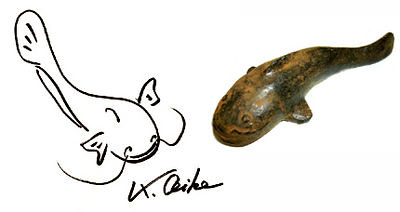
みや ずもう かち を ゆずる も おき なれば
尾池和夫(おいけかずお)
経の音香と漂う京の朝
きょう の おと こう と ただよう きょう の あさ
Monks chanting prayers
incense wafts in the air
Goodmorning Kyoto!
レベッカ
On Oahu, located on the windward side called Kaneohe, the mountain range has formed some majestically high cliffs. Always caressed with passing clouds, a place called Stairway to Heaven can be vaguely seen above Haiku valley. Leading our expedition of 8 , we were lucky to have one experienced hiker among the rest of us novice hikers. Even back in the 70’s, it was difficult to get permission to hike there, since it was on Forrest Reserve land and the Coast Guard Omega Antenna Station. Periodically they would host an open house.
Our guide suggested that we bring lots of water, lite lunch snack with candy bars, gloves padded to protect hands from getting blisters, a wind breaker jacket in case it rained, and comfortable rubber padded shoes (no leather slippery soles), sunglasses to protect eyes, camera for panoramic view, sunscreen, all this but keeping your pack light. Nothing to be carried by hand, since both hands were needed to be free for this hike, and definitely no handbags or wallets, just an ID.
It was best to start as soon as they opened cause it took approximately 3 hours up the mountain and an hour down, running and sliding with hands on the bars. Including, four catch your breath breaks used for scenery appreciation which were amazing at that elevation. The air gets thinner as you go up so it makes breathing difficult. Before we started, there was a waiver to be signed,saying that the place was not responsible for any accidents or deaths, which was a good way to discourage any amateurs from trying this hike.
The first part of the hike (30-40min) was normal till we hit the first ledge and rest stop. From there we saw a ladder, like those on children’s play gyms, except it went straight up the side of the mountain for seven feet then a ledge footing to rest then more ladders. Now we knew why we had to have gloves and hands free!
By the second rest stop, just a third of the way up, one girl in our group decided she could not go any further so she said she’d wait there till we came down. We didn’t want risk her to going back down by herself, without someone helping her. It was pretty much a buddy buddy system with the person in front helping the person below when they needed help. We let several groups go ahead of us since they were faster and in better shape than we were, despite the fact that we were only in our 20’s-30’s.
It took 2 hours to almost reach the top of the ridge. The higher we went the harder it was to breath, the slower we moved. But we noticed some military men in groups of 2 literally running past us. It seemed like they were on a race or daily exercise and ran non-stop as if to break some record to get up there and down, they were having so much fun laughing and talking, while we were huffing and puffing, struggling just to get up there. Once on top, it’s about 40 mins of winding walkways with single guard rails on both sides which we clung to for dare life, to reach the end. Makes you feel much safer than Koko Crater Rim hike, where the rim is about 6 inches wide and crumbly like gravel, with so many small loose rocks that you have to crawl on all 4’s to cross the dangerous narrow areas and no guard rails. Koko Crater Rim Hike was considered for Intermediate Hikers, but to me it seemed like it was for the advanced, too scary.
Now for the fun part, going down! It was more fun and much easier and faster. Just hanging on to the rails with 2 hands and sliding down each 7 ft. ladder at a time with both feet on the outside of the rails.
By the time we hit bottom, my hands were blistered even though I had gloves (not the right kind for bars), my arms were aching from using it to pull myself up each bar, (should’ve practiced pull ups and chin ups), and my legs felt, okay just a little weak, but not falling off like my arms. Once we hit level ground we began laughing and partially jumping for joy that we had finished this feat. That was great! But let’s not do it again for a while. The blisters, aches and pains took a while to go away.
Today the place is closed to the public, ever since vandals in the night tore off several segmented ladders and threw them down into the non accessible terrain. The cost was too much to replace them and there was no need to, for repairs and checks could now be done by helicopter. Back then technicians had to climb up there. Recently groups of people tried to get funding to fix and reopen the place,but failed. So until then, the “Stairway to Heaven” is lost to memories……..for now!

